
 MENU
MENU Symposium 2025
Join Us!
Our 4th annual AI & Health symposium is coming soon! For this year’s symposium, e-HAIL is partnering with AI & DHI, with additional support from the Institute for Healthcare Policy and Innovation (IHPI).
Accelerating interdisciplinary collaborations through opportunities for engagement around AI & health research is a major focus of the e-HAIL initiative, and the symposium is set up to maximize learning from and connecting with fellow faculty researchers interested/working in this field. AI & DHI provides data services, computing resources, and expertise in clinical workflow integration at Michigan Medicine (free of charge) to all U-M researchers. Attendees will learn more about all of these services and other U-M AI & Health-related resources.
Friday, September 12
9:00 AM – 4:00 PM
North Campus Research Complex
Building 18, Dining Hall
2800 Plymouth Rd
Ann Arbor, MI
Registration is closed for this event
Agenda
9:00
Coffee & Registration
9:15
Speaker Introduction
Rada Mihalcea, PhD, Janice M. Jenkins Collegiate Professor of Computer Science and Engineering, Professor of Electrical Engineering and Computer Science, e-HAIL Co-lead Convener
Opening Remarks
Eric Michielssen, PhD
Associate Dean for Research Strategy, College of Engineering; Louise Ganiard Johnson Professor of Electrical Engineering and Computer Science; Professor of Electrical Engineering and Computer Science
9:30
Lightning Talks
Moderator: Rada Mihalcea, PhD, Janice M. Jenkins Collegiate Professor of Computer Science and Engineering, Professor of Electrical Engineering and Computer Science, e-HAIL Co-lead Convener
Participants:
Keith Feldman, PhD, Associate Professor, Learning Health Sciences
A Quest for Context: Computational Methods to Improve the Way We Represent and Utilize Patient Data
Alexander Rodriguez, PhD, Assistant Professor, Electrical Engineering and Computer Science
Integrating AI and Science-Based Models in Health
Liyue Shen, PhD, Assistant Professor, Electrical Engineering & Computer Science
Dynamic Modeling of Patients, Modalities and Tasks via Multi-modal Multi-task Mixture of Experts
Yixin Wang, PhD, Assistant Professor, Statistics
Causal Inference with Unstructured Data
10:30
Coffee Break
10:45
Tabletop Discussions: Research & Resources
12:00
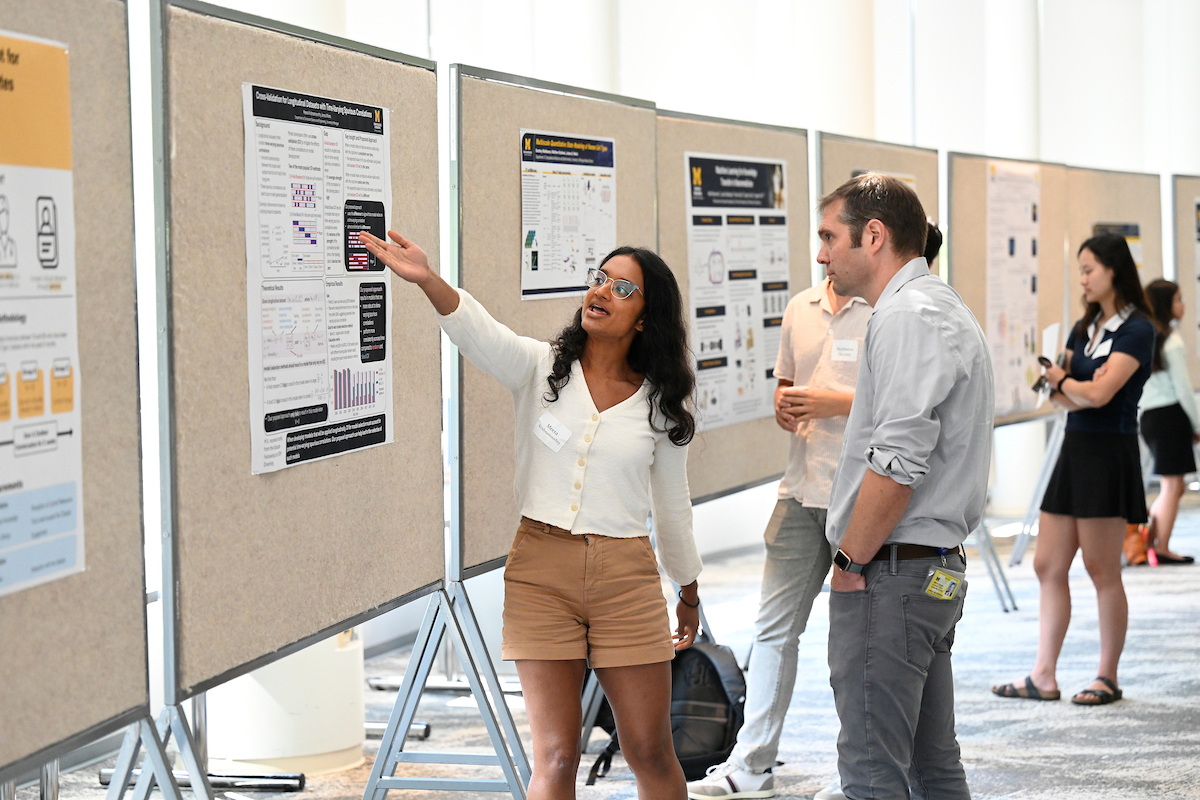
Lunch, Poster Session
1:15
Keynote Speaker Introduction:
Jenna Wiens, PhD, Associate Professor, Electrical Engineering and Computer Science, AI&DHI Co-director
Keynote: Empowering Biomedical Discovery with “AI Scientists”
Marinka Zitnik, PhD, Associate Professor of Biomedical Informatics, Harvard Medical School
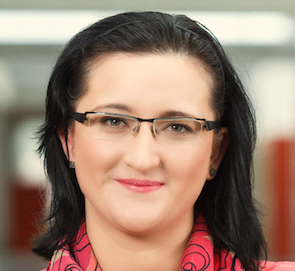
Marinka Zitnik is an Associate Professor of Biomedical Informatics at Harvard Medical School, at Kempner Institute for the Study of Natural and Artificial Intelligence at Harvard University and at Broad Institute of MIT and Harvard. Zitnik investigates foundations of AI that contribute to the scientific understanding of medicine and therapeutic design, eventually enabling AI to learn and innovate on its own. Her research won best paper and research awards, including the Kavli Fellowship of the National Academy of Sciences, Kaneb Fellowship award at Harvard Medical School, NSF CAREER Award, awards from the International Society for Computational Biology, International Conference in Machine Learning, Bayer Early Excellence in Science, Amazon Faculty Research, Google Faculty Research, Roche Alliance with Distinguished Scientists, and Sanofi iDEA-iTECH Award. Zitnik founded Therapeutics Data Commons, a global open-science initiative to access and evaluate AI across stages of development and therapeutic modalities, and she served as the faculty lead of the AI4Science.
Keynote abstract: We envision “AI scientists” as systems that reason skeptically, integrate multimodal data, and interface with experimental platforms to learn and innovate autonomously. In this talk, we describe AI models that operate at four biological scales and pave the way toward “AI scientists”. At the molecular scale, ProCyon is a multimodal foundation model that predicts protein phenotypes from sequence and structure, executes zero-shot molecular function inference, and generates phenotypic descriptions for proteins in the dark proteome. At the cellular scale, PINNACLE fuses single-cell transcriptomic profiles with protein interaction networks to model drug effects and nominate therapeutic targets with cell type specificity. At the therapeutic scale, TxAgent performs real-time reasoning over trusted, verified resources and clinically validated insights spanning all drugs developed since 1939. At the patient scale, COMPASS predicts immunotherapy response across treatments and cancer types using concept bottlenecks grounded in mechanistic biology, informing early-stage trial design and patient selection. We validate model outputs with multi-institutional patient datasets, emulated clinical trials, and experimental studies in vitro and in vivo. As these systems gain capability and collaborate with researchers, they can generate testable hypotheses, design research plans, guide experimental evaluation, and open new paths for biomedical discovery.
2:35
Coffee Break
2:50
Funding Opportunities Panel: Beyond Federal Sources
Moderator:
Henrike Florusbosch, PhD, e-HAIL Program Manager
Panelists:
Christine Muchanic, MA, Senior Director, Research Relations, College of Engineering
Michael Ranella, MBA, MPH, Senior Director, Fast Forward Medical Innovation Business Development
Colleen Sherman, Director, Corporate and Foundation Relations
3:50
Speaker Introductions
Brahmajee Nallamothu, MD, MPH, Stove Julius Research Professor of Cardiovascular Medicine
Professor of Internal Medicine – Cardiology, AI&DHI Co-director
Closing Remarks
John Ayanian, MD, MPP; IHPI Director; Alice Hamilton Distinguished University Professor of Medicine and Healthcare Policy, Medical School
Steven L. Kunkel, PhD; Executive Vice Dean for Research, Medical School; Chief Scientific Officer, Michigan Medicine; Peter A. Ward Distinguished University Professor; Endowed Professor of Pathology Research


Questions?
Contact J. Henrike Florusbosch, Ph.D., e-HAIL Program Manager, at jflorusb@umich.edu.