MENU
MENU CSE welcomes six new faculty
The Computer Science and Engineering (CSE) Division at the University of Michigan welcomes three new faculty to campus this academic year, each bringing a wealth of experience to U-M. With expertise spanning human-AI interaction, machine learning, and computing education, these new faculty members will contribute to U-M’s tradition of excellence in research and teaching.
Please join us in welcoming the following new faculty to CSE.
Henry Chai
Lecturer III
PhD, Computer Science and Engineering
Washington University in St. Louis
Henry Chai comes to CSE from Carnegie Mellon University, where he was an assistant teaching professor in the Machine Learning department and played a key role in delivering and developing the department’s introductory courses. His teaching and research focus on active learning, teaching at scale, and pedagogy for computing, and he is especially interested in bridging theory and practice in the classroom. Chai’s scholarly work explores questions in Bayesian machine learning, probabilistic numerics, and efficient reasoning about complex, intractable quantities, with publications at venues such as ICML, AISTATS, and VIS.
In the Fall of 2025, Chai will teach EECS 203: Discrete Math.

Travis Doom
Lecturer III
PhD, Computer Science
Michigan State University
Travis Doom joins CSE after a distinguished career at Wright State University, where he served as professor, associate dean, and ultimately professor emeritus of computer science and engineering. An internationally recognized educator and recipient of the IEEE-CS Undergraduate Teaching Award, Doom’s teaching and research emphasize undergraduate engineering education, digital systems, and data science, with a focus on active learning and workforce development. He is deeply committed to supporting student success, and brings to Michigan decades of leadership in curriculum development, university governance, and engineering education.
In the Fall of 2025, Doom will be teaching EECS 280: Programming and Introduction to Data Structures.
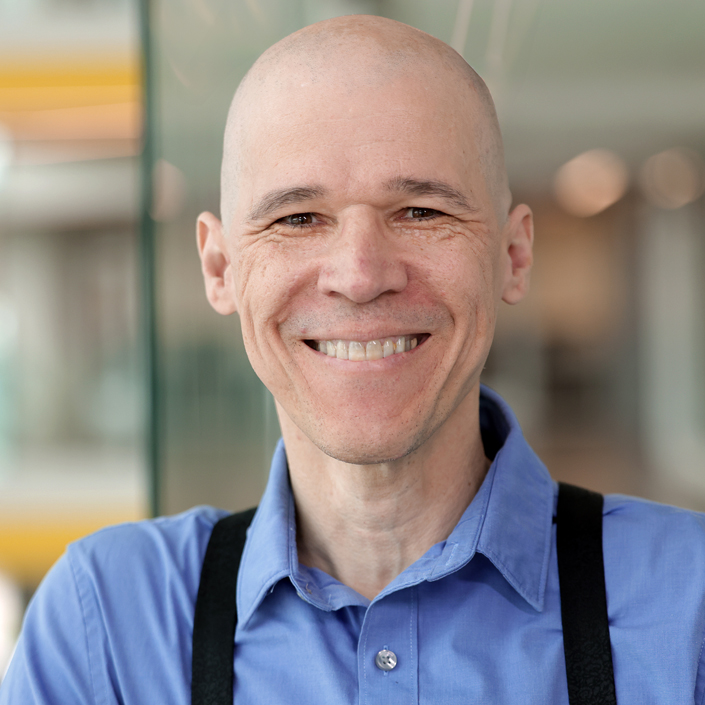
Q. Vera Liao
Associate Professor
PhD, Computer Science
University of Illinois at Urbana-Champaign
Q. Vera Liao joins CSE following a distinguished career as a Principal Researcher at Microsoft Research, where she was a leading member of the FATE research group advancing fairness, accountability, transparency, and ethics in AI. An internationally recognized expert in human-computer interaction, Liao’s research centers on responsible AI, explainable AI, and human-centered design of emerging intelligent systems. Her pioneering work has shaped widely used AI transparency tools, and has been honored with multiple paper awards at top conferences such as CHI and IUI.
This Fall, Liao will be teaching CSE 594: Human-AI interaction and Systems. Topics include AI UX, human-AI collaboration, responsible AI, and HAI in different applications and domains. Students will design, develop, and evaluate human-AI systems, addressing real-world needs and ethical concerns.
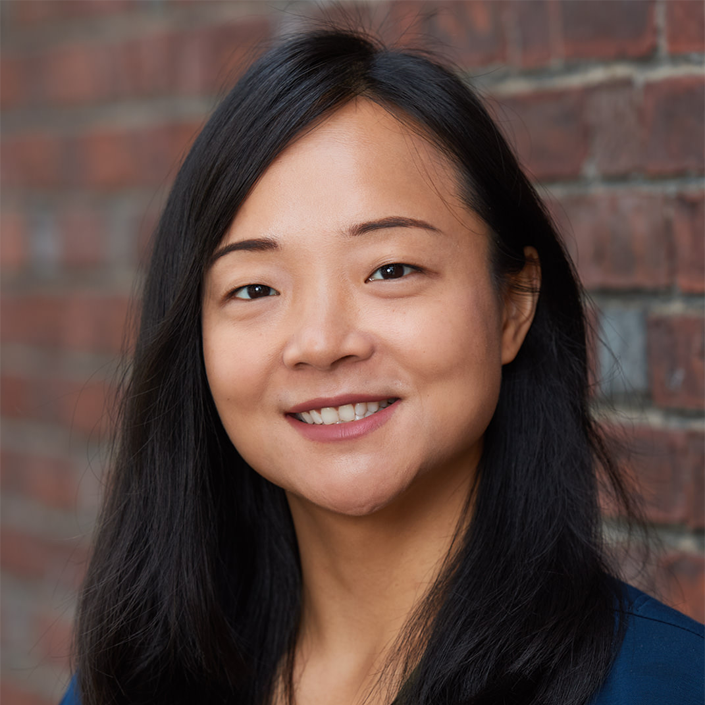
Starting in Fall 2026
Although they won’t be on campus this academic year, we’re also pleased to announce that the following three faculty will be joining us in Fall 2026.
Daniel Adler
Assistant Professor
PhD, Information Science
Cornell University
Dan Adler will join CSE following his postdoctoral appointment at Cornell University, where he recently earned his PhD. His research focuses on developing data-driven technologies and AI models for high-impact healthcare applications, bridging human-computer interaction, responsible AI, ubiquitous computing, and digital health. Adler’s work has been published at top conferences in HCI and ubiquitous computing (CHI, CSCW, UbiComp), as well as many health and digital health journals (JMIR, npj). He has produced novel AI-powered passive sensing tools that leverage consumer devices for mental health monitoring, and he has pioneered methods for evaluating the reliability and generalizability of such systems. At Michigan, he will be affiliated with the Human-Centered Computing Lab and the Eisenberg Family Depression Center.
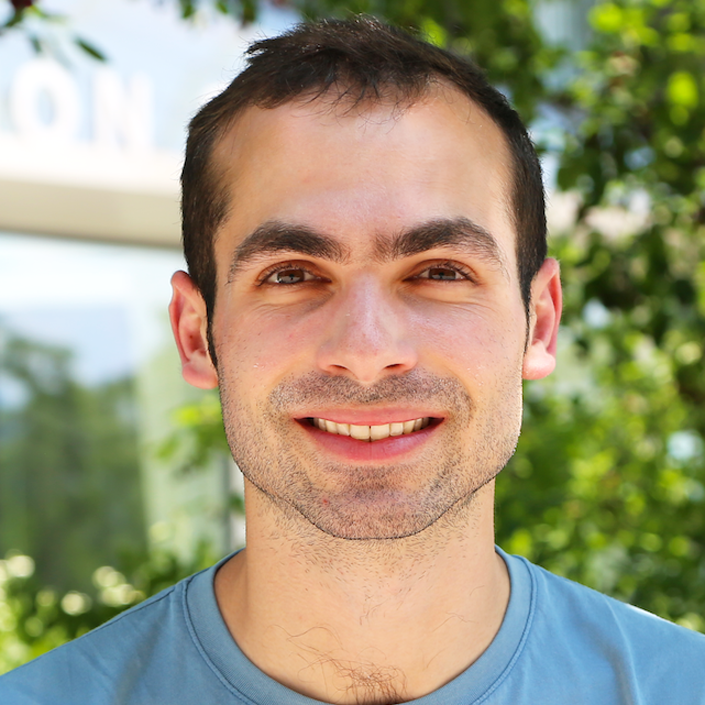
Silviu Pitis
Assistant Professor
PhD, Machine Learning
University of Toronto
Silviu Pitis recently completed his PhD at the University of Toronto, where his ongoing work is supported by an OpenAI Superalignment Grant and a CIFAR AI Safety Postdoctoral Fellowship. His research has advanced the normative design of goals, rewards, and abstractions for intelligent agents, including reinforcement learning systems and large language models. With a background spanning computer science, law, and economics, Pitis approaches AI from an interdisciplinary perspective, focusing on the fundamental question of how to design AI systems that align with societal values and serve general-purpose tasks. His work has appeared at top conferences such as NeurIPS, AAAI, and ICML, and his research has been recognized by fellowships and competitive grants.
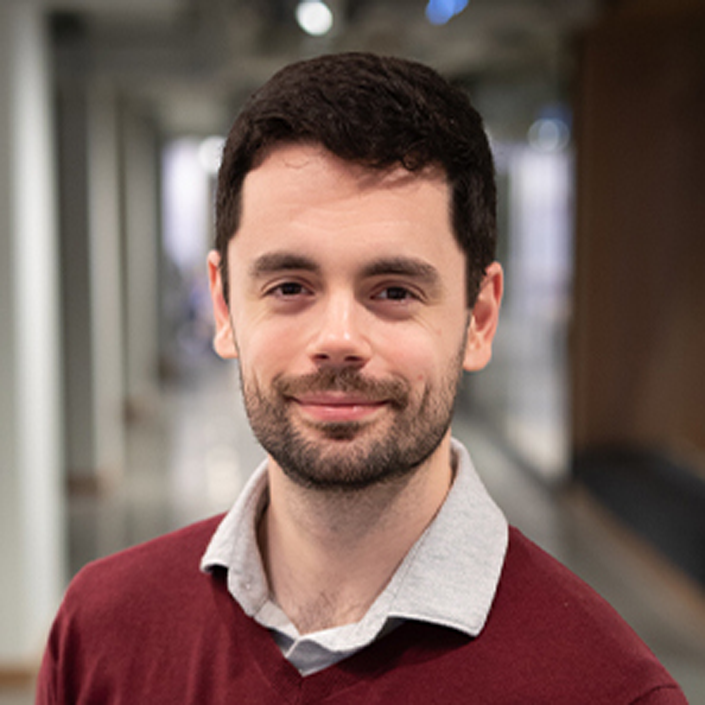
Gabriel Poesia
Assistant Professor
PhD, Computer Science
Stanford University
Gabriel Poesia will be joining CSE from the Kempner Institute at Harvard University, where he is currently a Research Fellow, having recently completed his PhD in computer science at Stanford University. His research focuses on developing self-improving AI systems capable of formal reasoning, including mathematical theorem proving, program synthesis, and open-ended discovery. Poesia’s work integrates techniques from type theory, reinforcement learning, language modeling, and program induction, with the aim of advancing both AI capabilities and human learning. His research has been recognized at top venues such as NeurIPS, ICML, and ICLR, and he is also active in programming competitions and computing outreach.