
 MENU
MENU CSE faculty lead two projects selected for U-M Strategic Initiative Fund support

Two projects led by Computer Science and Engineering (CSE) faculty are among the inaugural recipients of support from the University of Michigan’s Strategic Initiative Fund (SIF). CSE faculty are also contributing to two additional interdisciplinary projects selected for funding.
The CSE-led projects are headed by Lin Ma, assistant professor of CSE, and Rada Mihalcea, Janice M. Jenkins Collegiate Professor of CSE. Their teams will develop human-centered AI systems for research data analysis and global mental health training, respectively. Mihalcea and Atul Prakash, Richard H Orenstein Division Chair of CSE, are also collaborators on projects focused on deepfake resilience and AI-assisted urban infrastructure planning.
The SIF is a $1 billion, 10-year investment supporting initiatives aligned with U-M’s Look to Michigan vision. Of nearly 500 ideas submitted, 37 projects were selected to collectively receive $40 million in initial funding. Selected proposals were required to address at least one of the vision’s five impact areas: human health, education, advanced technology, sustainability, and civic engagement. They were also expected to encourage collaboration across disciplines and units.
Human-centered AI for research data analysis

Lin Ma is leading a project titled “Mi DuRAG: Human-Centered AI for Data Analysis in Research and Education,” in collaboration with Tina Lasisi, assistant professor of anthropology. Their project will develop an AI-assisted data analysis system that captures and reuses expert reasoning while helping researchers organize and interpret complex datasets.
Most AI data analysis tools are designed to automate a single task: a user uploads data, receives an answer, and starts over with the next question. Ma and Lasisi’s project instead aims to create an AI data partner that works alongside researchers while preserving the reasoning behind their decisions.
The system will capture expert choices, rationales, and information about how data is structured in a persistent graph rather than allowing that knowledge to disappear within temporary chatbot conversations. To accomplish this, the team will combine research in self-optimizing database systems with anthropological research on human biological variation. They will develop a public benchmark based on messy biological and survey datasets, as well as an open-source prototype of their dual-layer reasoning and analysis graph architecture.
Ultimately, the project aims to make complex data analysis more transparent, collaborative, and reusable while allowing researchers and students to focus on the questions that require human expertise.
Expanding global mental health training with AI
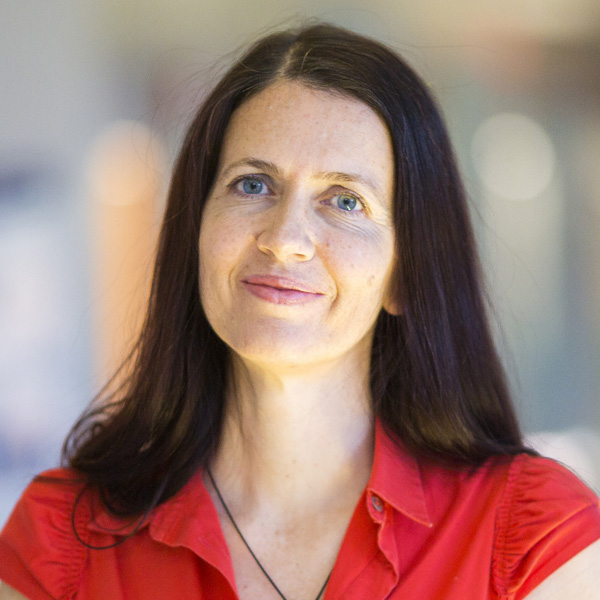
Rada Mihalcea is leading a project titled “AI-Enabled Scalable Training for Global Mental Health Service Providers,” in collaboration with Lynae Darbes of the School of Nursing and John D. Piette of the School of Public Health. Their project will develop a culturally adapted, AI-enabled platform for training and assessing mental health counselors and therapists in low- and middle-income countries (LMIC).
Conflict, public health emergencies, natural disasters, and climate change have increased psychological distress worldwide, while the supply of trained mental health professionals remains limited, especially in LMIC.
To address this, the platform will support hands-on counselor training, reflective skill development, and automated, actionable feedback on counseling sessions in multiple languages. The team will combine U-M expertise in natural language processing, global mental health training, and community-engaged research. The project will initially focus on the Spanish-language training in Latin America and isiZulu-language training in South Africa, while producing guidelines and strategies that can be adapted for other countries, languages, and health contexts.
The goal of the project is to expand the availability and quality of mental health services by making culturally responsive training and assessment more accessible and scalable.
Additional CSE involvement
CSE faculty are also contributing to two other selected projects.
Mihalcea is a secondary contact for the Michigan Deepfake Resilience Hub, a tri-campus initiative led by Khalid Mahmood Malik of UM-Flint. The project will combine multimodal deepfake detection, human-centered interfaces, and public education to help Michigan residents and institutions identify AI-generated media and fraud.
Prakash is a secondary contact for the Center for Human–Agentic AI Collaboration for Urban Resilience. Led by Sherif El-Tawil of Civil and Environmental Engineering, the center will work with municipal and community partners to develop a human-in-the-loop AI platform for modeling flooding, severe weather, and infrastructure failures.
Together, these projects highlight the role of computing research in addressing challenges spanning scientific discovery, education, health, public trust, and urban resilience.